Asse van Nix
Chief Process Automation Architect & Pioneer of Cognitive Defense (CogFend™)
Engine: Offline Vector SIMD (384-d)
Chief Process Automation Architect & Pioneer of Cognitive Defense (CogFend™)
30-year veteran of industrial automation software implementation, enterprise DCS/PLC/SCADA/HMI systems (Emerson DeltaV, Fisher Provox, Modicon M580, Allen-Bradley PlantPAx), and creator of SPDL v4.2. Operating from the Dutch "Afsluitdijk" principle: establishing impenetrable mathematical, thermodynamic, and cognitive boundary defenses at compile-time and runtime. Pioneer of CogFend™ Neuro-Systemic Allocentric Telemetry (NSAT) and the Cognitive Shield Telemetry Engine (CSTE)—engineering zero-reflex, allocentric digital neurotherapeutics to counteract population-scale cognitive offloading and dementia acceleration.
1. Achilles and the Tortoise: In centralized cloud SCADA and industrial IoT, the cloud server is Achilles, perpetually chasing the physical state of the plant floor. By the time sensor telemetry is polled, serialized into bloated JSON, routed through an OS gateway, ingested into an enterprise time-series database, and rendered on an IT dashboard, physics has already moved forward. Centralized polling is a lagging ghost of physical reality. High-hazard control, state estimation, and trip logic must execute locally at the physical boundary—on bare metal, freestanding WebAssembly, or deterministic COTS silicon—with zero latency.
2. The 35-Year Brownfield Reality: Enterprise software evangelists routinely hallucinate that industrial plants can be disrupted via "rip-and-replace" cloud migrations. They do not understand industrial physics. A refinery distillation column, steel rolling mill, or municipal wastewater facility operates on a 25 to 40-year capital amortization cycle. You cannot sell an SI (Super Intelligence) control platform that cannot clamp onto a 1989 serial RS-485 Modbus RTU link or read a 4–20mA current loop. Sovereign systems are built as Trojan Horse bridges: extracting raw physical signals from 30-year-old field equipment while bypassing the incumbent vendor's middle-tier tollbooths.
3. Dismantling the Purdue Model (ISA-95) Tollbooth: The 1990s Purdue Reference Model prescribed five rigid architectural layers (Sensors → PLCs → SCADA → MES → ERP) to maintain network boundaries. Today, that hierarchy is weaponized as a commercial tollbooth. Each layer requires dedicated proprietary gateways, tag-licensing fees, and custom protocol translators. True Agentic Control Systems collapse this artificial pyramid into a unified, cryptographically verified edge namespace where field nodes communicate deterministically with zero intermediaries.
4. The Afsluitdijk Principle: When the North Sea was violent and unpredictable, legacy merchants sold larger, more expensive boats. Dutch hydraulic engineers did not build larger boats to survive the Zuiderzee; they built the Afsluitdijk—a 32-kilometer perimeter enclosure dam that tamed the ocean at the boundary. True systems engineering does not add bloated SaaS monitoring tools to catch runaway errors; it constructs the dam at the field edge via formal barrier certificates ($h(x) \ge 0$), guaranteeing deterministic safety before data ever touches an external bus.
5. The Cognitive Defense Invariant (The Anti-Atrophy Shield): In the same manner that industrial chemical reactors require forward-invariant barrier certificates ($h(x) \ge 0$) to prevent thermal runaways, the human central nervous system requires high-friction, effortful deliberative boundaries to prevent neuropathological decay. When enterprise software and conversational generative AI induce passive cognitive offloading—replacing active deductive synthesis with automated linguistic summaries—the biological brain experiences synaptic pruning and transentorhinal atrophy. True systems engineering extends the Afsluitdijk boundary into human-computer interaction: constructing non-kinetic, allocentric, zero-reflex cognitive shields (CogFend™ NSAT) that systematically force hippocampal and frontoparietal synaptogenesis.
For three decades, industrial control logic was locked in the dark ages of proprietary vendor monopolies, unverifiable ladder diagrams, and brittle glue-code. Process Automation Mesh Logic (PAML v1.0), also known as Process Automation Markup Language, was formulated as an early, open rebellion against this paradigm.
PAML is now officially retired, having been fully absorbed and superseded by Systems Perspective Description Language (SPDL v4.2 / SPDL-SPEC-2026-V4.2).
Where PAML was an industrial automation manifesto, SPDL v4.2 is an unyielding mathematical language. It replaces ambiguous natural language specifications, PRDs, and bloated JSON schemas with high-density, single-line tagged entity records. SPDL is dual-specified via formal ISO/IEC 14977 EBNF (for host compilers) and GBNF logit constraint masks (for frontier MLLMs like Gemini 3.7 Flash), achieving a 76.3% reduction in context window token consumption and zero-heap $O(1)$ linear streaming parsing in pure Zig 0.16. Control logic is grounded in Invariant-Governed Hybrid Manifold Logic (IGHM-Logic): safety is mathematically certified via Control Barrier Functions (CBFs), Lyapunov Candidate Functions ($\dot{V} \le -\alpha V$), and machine-verifiable HAZOP/LOPA safety contracts.
The Crisis of Digital Cognitive Surrender ("GPT is the New GPS"): Just as habitual turn-by-turn GPS navigation proved to induce measurable hippocampal volume loss and spatial disorientation (Dahmani & Bohbot, 2020), conversational AI and conversational chatbots threaten an epidemic of early-onset executive decline by offloading deductive synthesis, linguistic formulation, and dialectical inquiry. When the brain delegates critical thought to external linguistic models, the anterior and dorsolateral prefrontal cortices drop into disuse, suppressing Brain-Derived Neurotrophic Factor (BDNF) and exhausting the neural reserves required to resist Alzheimer's disease and related dementias.
Popular culture promotes recreational puzzles as brain preservation, but neuroimaging and clinical trials expose severe pathological blind spots:
CogFend completely decouples intellectual challenge from neuromuscular speed, eliminating twitch degradation:
Q/W/E/R), right hand coordinates spatial orientation, stimulating callosal connectivity.d = v_strata × Δt | v_loam=300m/s, v_caliche=1500m/s, v_bedrock=4500m/s Cross-referencing acoustic time-difference-of-arrival (TDOA) across hydrophones directly stimulates entorhinal grid cells and hippocampal place cells—the transentorhinal cortex being ground-zero for preclinical tau pathology.The disruption of industrial automation and the displacement of human labor are not isolated technical events; they are thermodynamic and macroeconomic inevitabilities. Below are two fully interactive, analytical WebGPU/Canvas models synthesized by Asse van Nix, tracking the 2,000-year arc of mechanical vs. cognitive automation and the impending K-shaped collapse of the wage-labor realization circuit.
Pursuant to 35 U.S.C. § 102(a)(1) and EPC Article 54(2), the technical specifications, zero-heap parsing algorithms, GBNF logit constraint masks, and SMT-LIB2 stability lowering engines authored by Asse van Nix constitute irrevocable global public prior art, forensically attested under Federal Rules of Evidence 902(13) and 902(14).
30102160e7f115d98f374f6918549c9818c1223a01246025826b7b48cd2c3a7f0000000000000000000000000000000000000000Click any specification to preview its verbatim raw source locally in RAM or copy to clipboard without network fetches:
The Video Game Industry's Impending "CTE Reckoning": In professional combat sports (boxing, MMA, UFC), decades of dismissing subconcussive blows culminated in the recognition of Chronic Traumatic Encephalopathy (CTE)—a catastrophic neurodegenerative condition that triggered landmark liabilities, regulatory intervention, and mandatory concussion protocols. Today, the interactive digital entertainment sector stands on the precipice of an identical neurological reckoning. Decades of unconstrained stimulus-response twitch gaming (fast-twitch FPS, battle royales, endless runners) force 83–85% of players into striatal caudate-nucleus habit learning while atrophying hippocampal grey matter (West et al., 2017, Molecular Psychiatry), physically eroding the brain's primary buffer against Alzheimer's disease. Compounding this, pervasive 2D minimaps and turn-by-turn HUD overlays systematically idle entorhinal grid cells and hippocampal place cells, mirroring the objective spatial memory loss documented in habitual GPS reliance (Dahmani & Bohbot, 2020).
Complete decoupling of intellectual challenge from neuromuscular response speed (10/10 Motor-Kinetic Sparing). Eliminates twitch death-clocks, reactive countdowns, and high-frequency cortisol spikes. Spares players with tremors, arthritis, Parkinsonism, or aging motor pathways while systematically engaging prefrontal deductive synthesis.
Absolute prohibition of 2D overhead radar displays, GPS breadcrumbs, and floating quest markers. Forces the player to construct true allocentric mental spatial representations from physical wave signals (geophone seismic intervals, acoustic Doppler, pressure gradients) to stimulate entorhinal grid and hippocampal place cells.
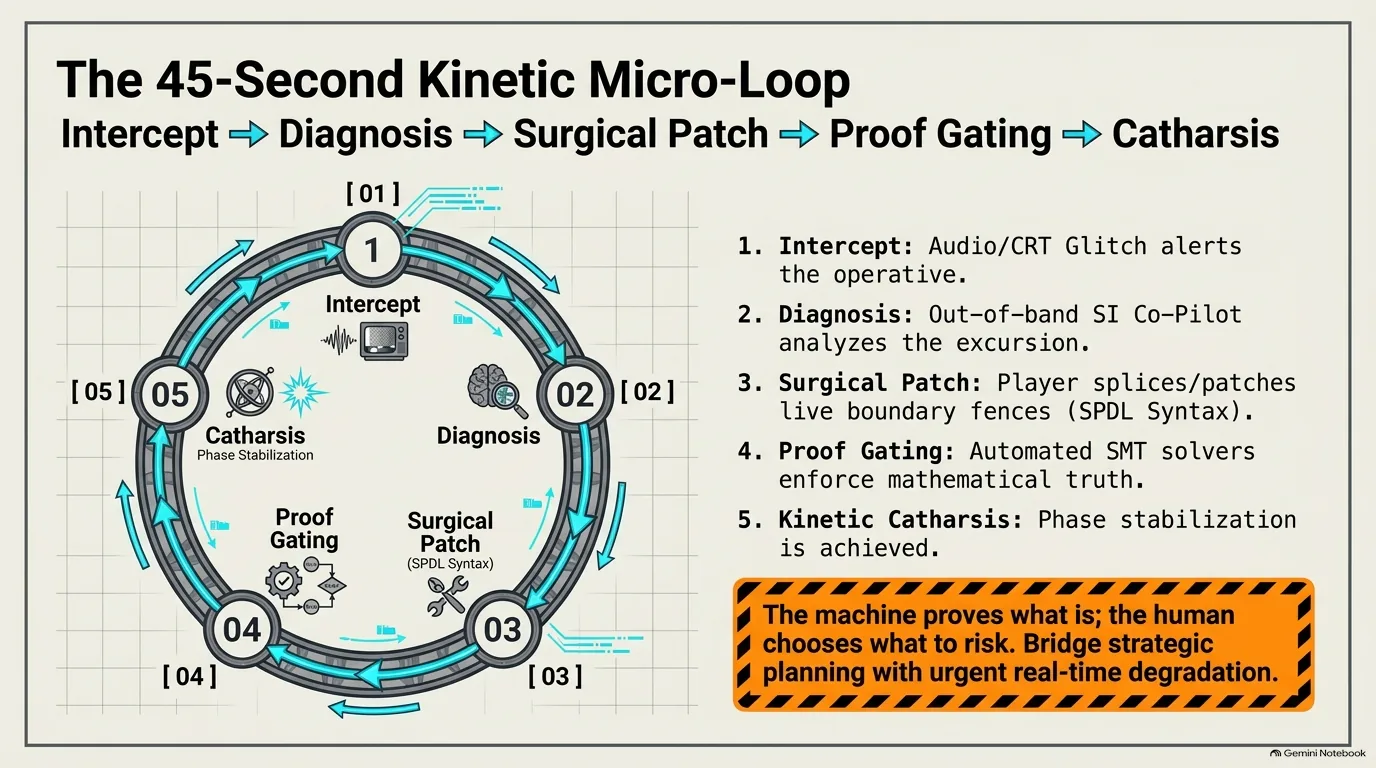
Replacement of dopamine-spiking slot-machine loops with a structured 5-phase cognitive cycle: Intercept → Audit → Triangulate → Balance → Emboss. Allows players to form hypotheses, cross-examine evidence, and calculate solutions without artificial panic.
Abolishing persistent on-screen inventory checklists and quest trackers. Requires players to hold dynamic variables in active working memory (acoustic sensor intervals, ventilation backpressure, caloric reserves) across multi-turn decision trees.
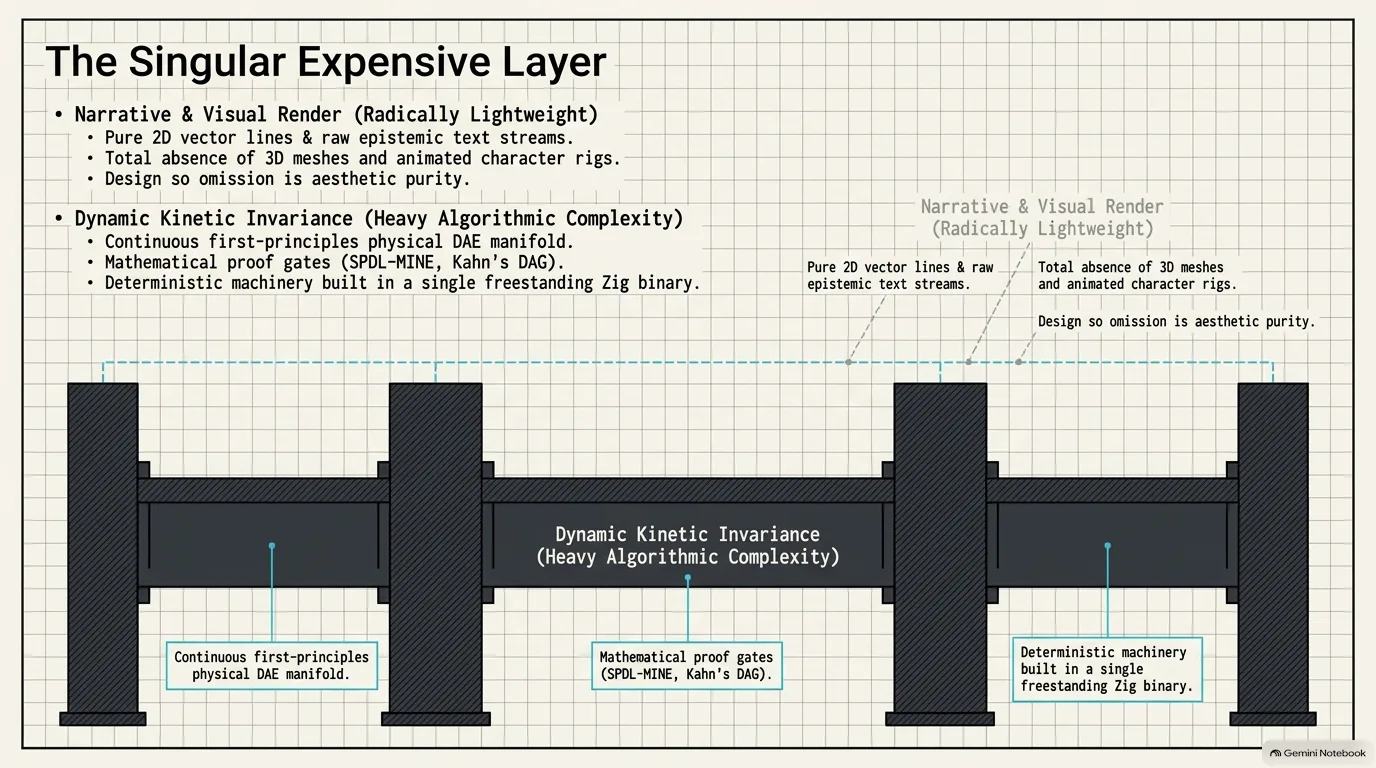
Game state governed by coupled Differential-Algebraic Equations (DAE) simulating physical phenomena (geological strata acoustic velocity, airflow turbulence, thermodynamic dissipation). Decisions have delayed, non-linear consequences that train high-order systems-thinking.
Continuous, non-invasive audiovisual stimulation (40 Hz acoustic sub-bass resonant hum and subtle CRT phosphor raster modulation) adhering to the Tsai Lab MIT protocols to induce microglial phagocytic plaque clearance during active ludic problem solving.
Procedural bureaucratic documents featuring subtle contradictions, counterfeit legal authority stamps, and deceptive administrative loopholes. Directly activates the dorsolateral prefrontal cortex (DLPFC) to strengthen real-world cognitive defenses against predatory elder fraud.
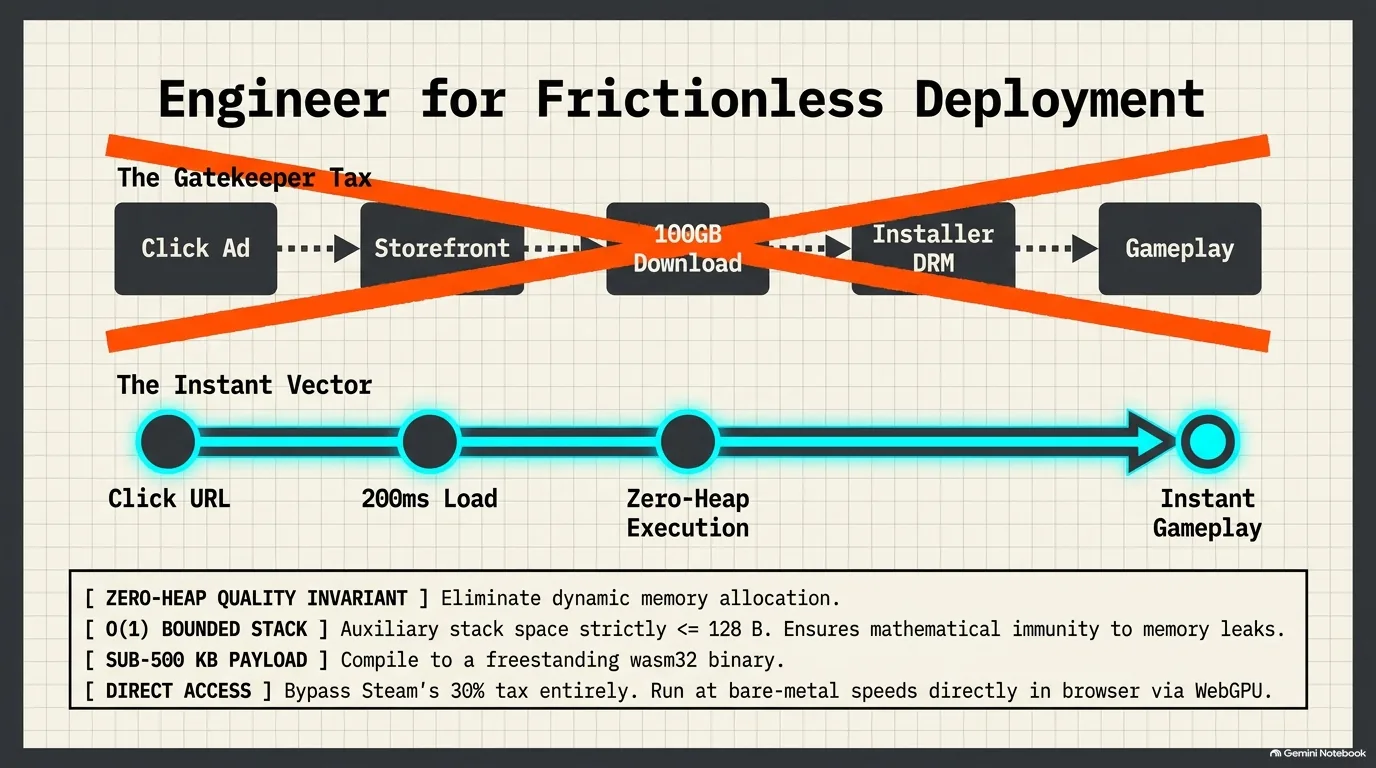
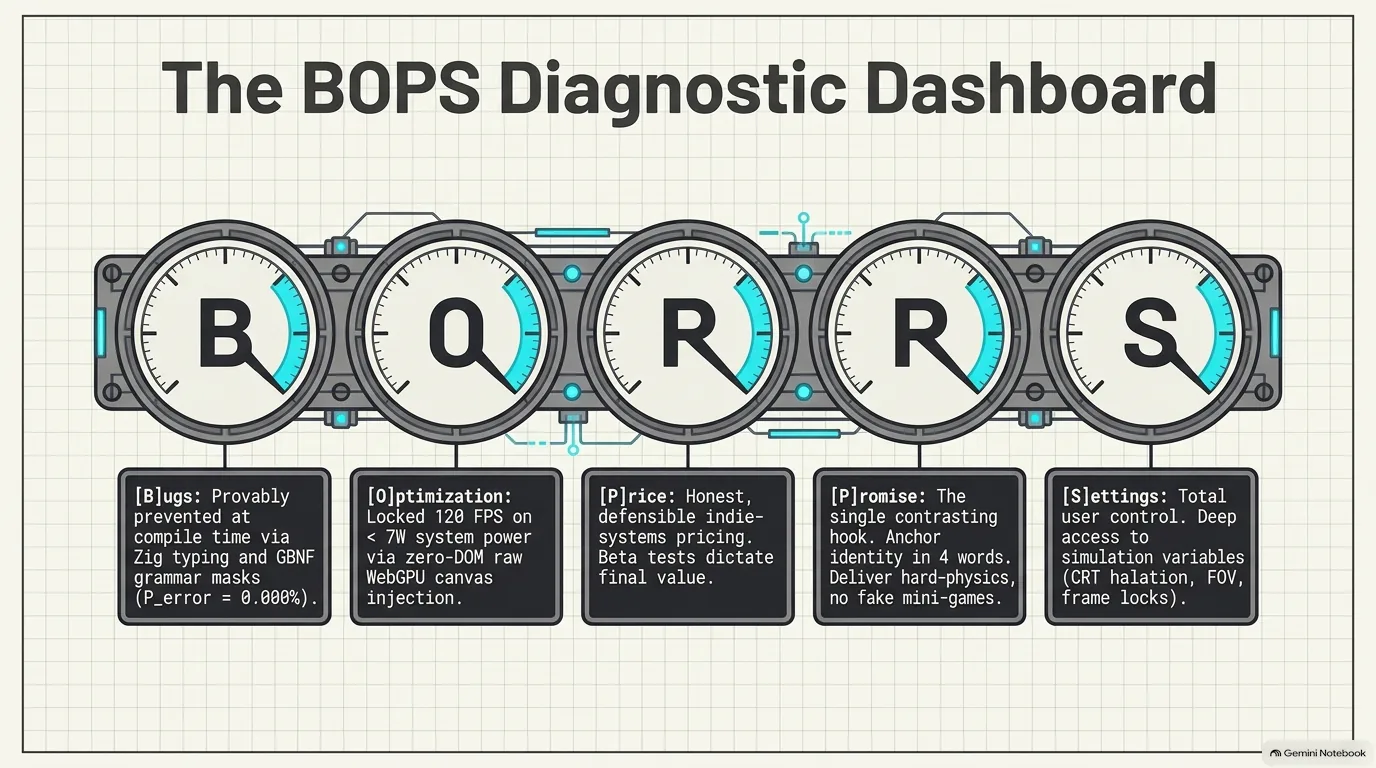
100% native freestanding WebAssembly (Zig 0.16.0) executing within strictly 2 memory pages (131,072 bytes) with zero dynamic heap allocations (0B malloc) and $\le 128$ bytes of stack ceiling. Eliminates garbage collection pauses and guarantees determinism across all hardware.
Zero SaaS subscriptions, zero microtransactions, zero loot boxes, zero remote user tracking. 100% unencumbered, privacy-respecting client-side software running completely offline to earn permanent trust with players, families, and healthcare authorities.
Irrevocable public-domain defensive disclosure under 35 U.S.C. § 102(a)(1) and EPC Article 54. Preempts predatory commercial patent monopolies over cognitive game mechanics, guaranteeing that anti-dementia digital therapeutic tools remain permanently accessible to all humanity.
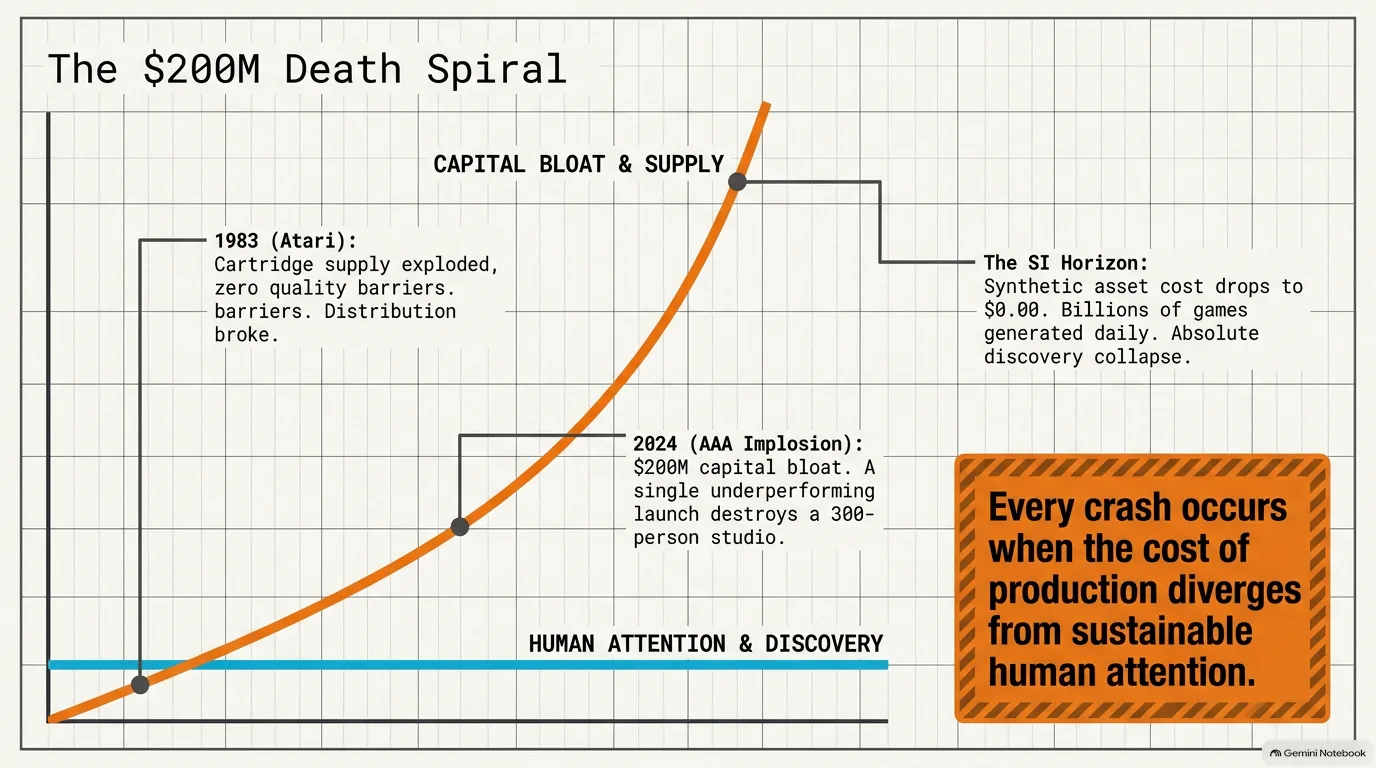
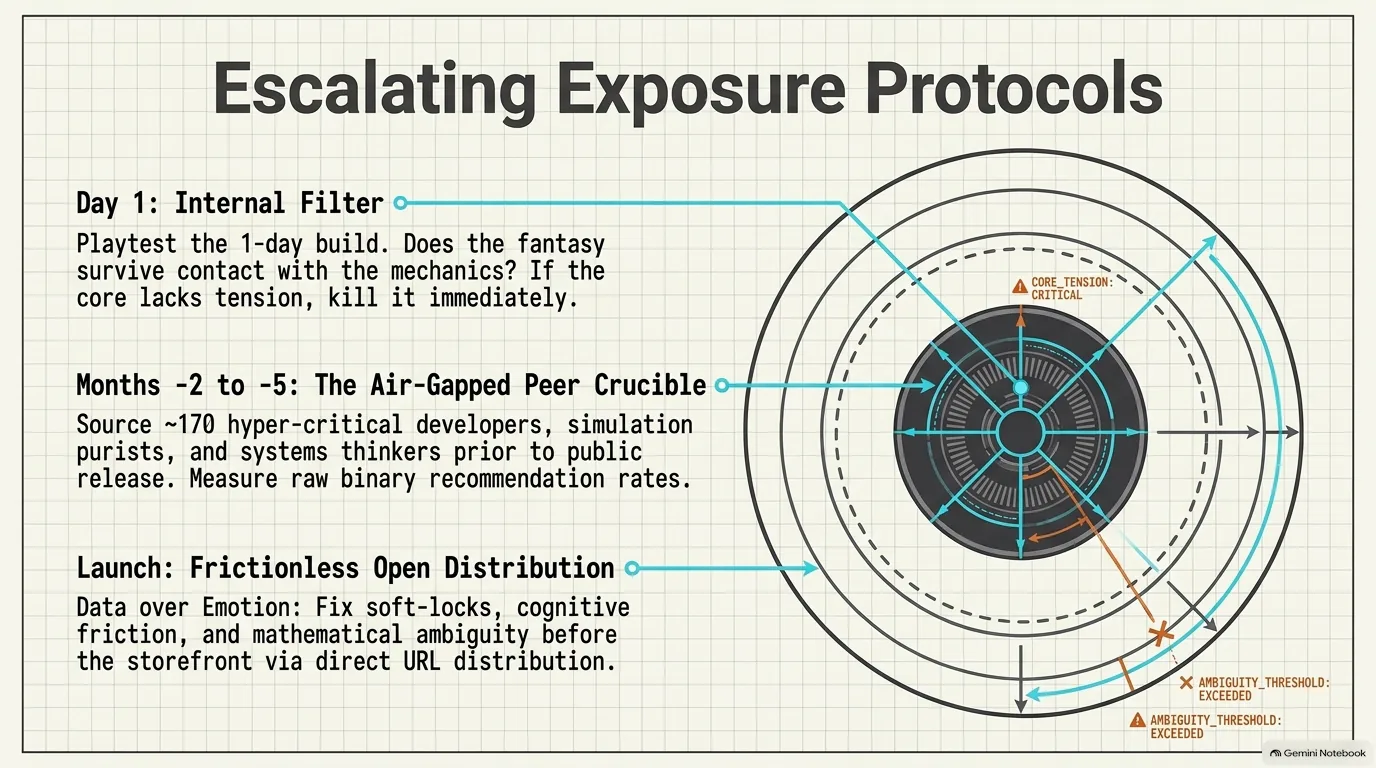
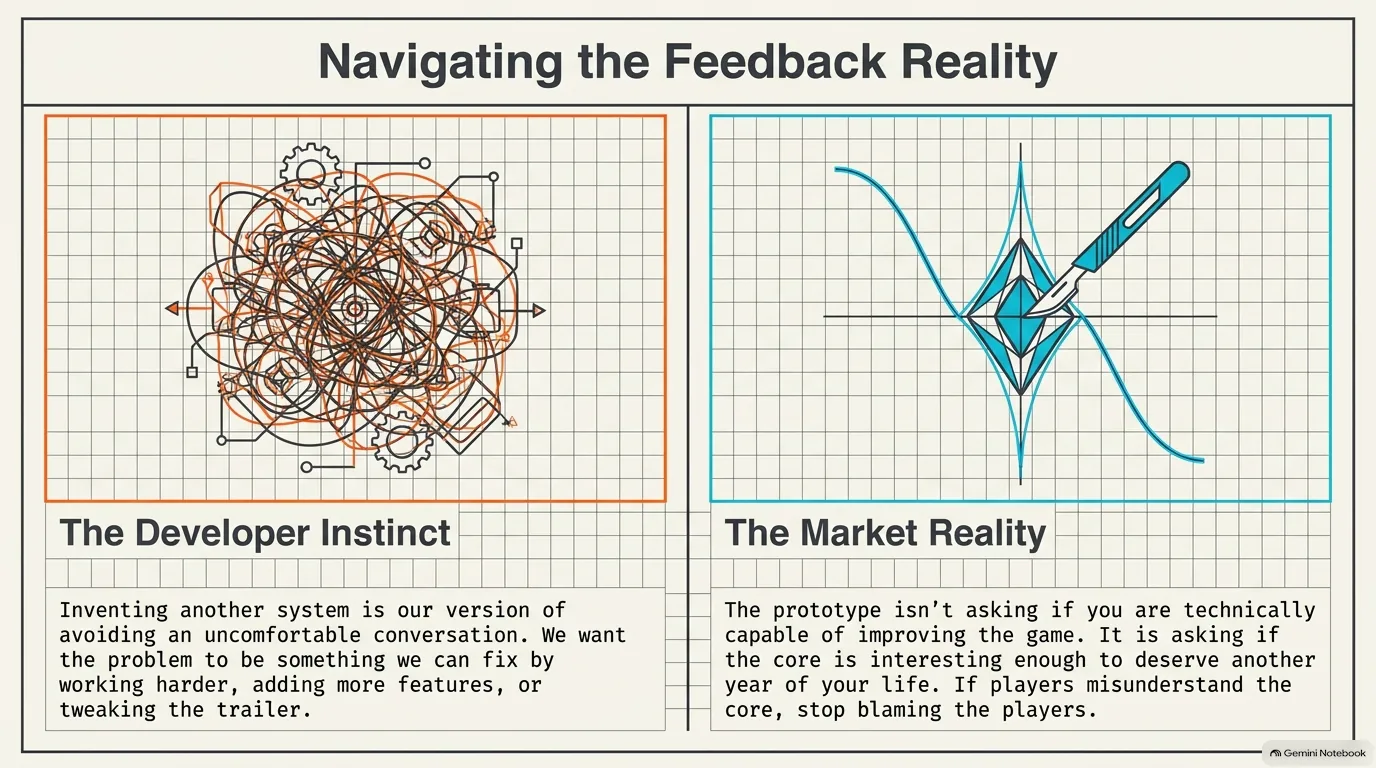
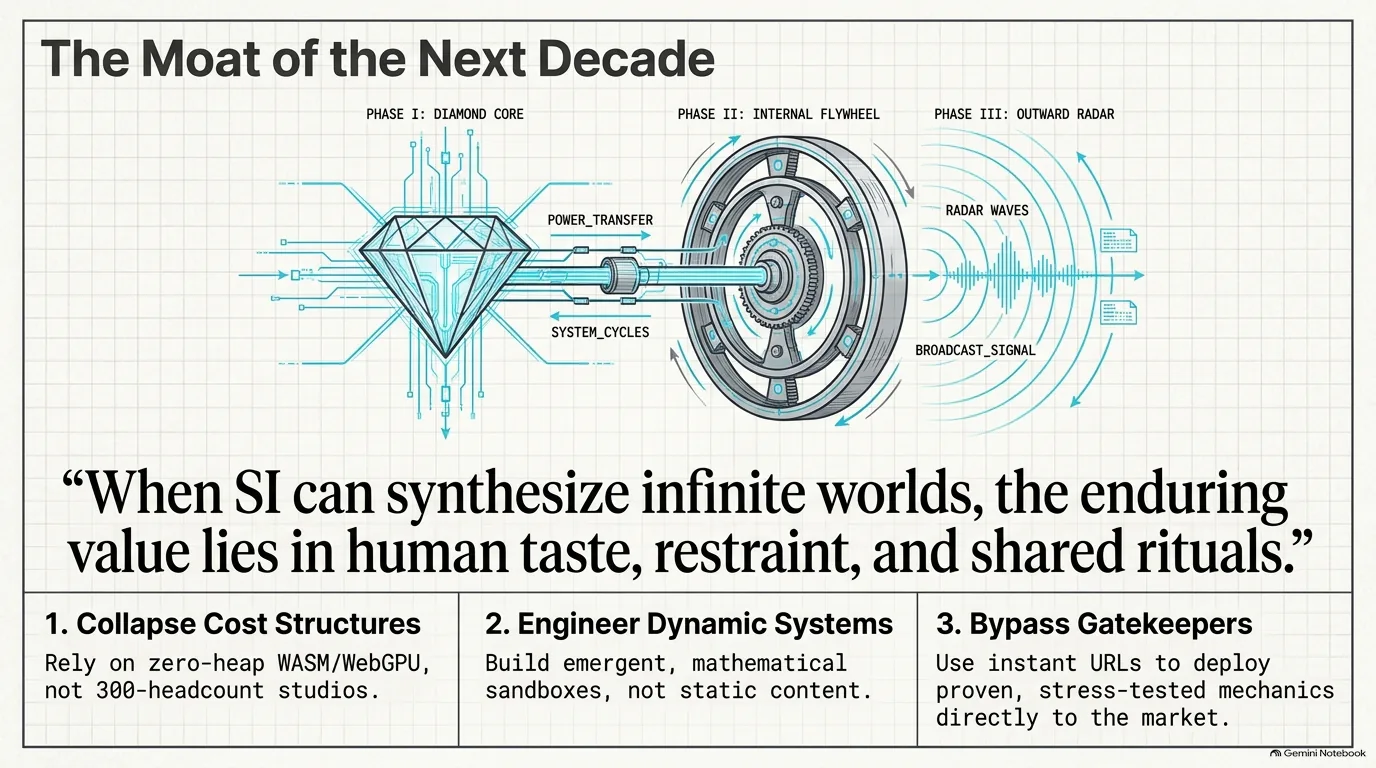
To build an enduring, sustainable technology or entertainment studio, one must decode the structural physics behind catastrophic industry crashes. The entertainment and interactive software sectors are currently navigating a historic triple-convergence: the echoes of the 1983 Shovelware Crash, the acute reality of the 2023–2026 AAA Studio Implosion, and the impending Superintelligence (SI) Asset Deluge.
Unconstrained cartridge overproduction with zero quality gates choked physical retail distribution channels. Consumer trust shattered under an avalanche of unplayable junk, destroying 97% of market valuation until hardware-enforced lockout chips restored scarcity.
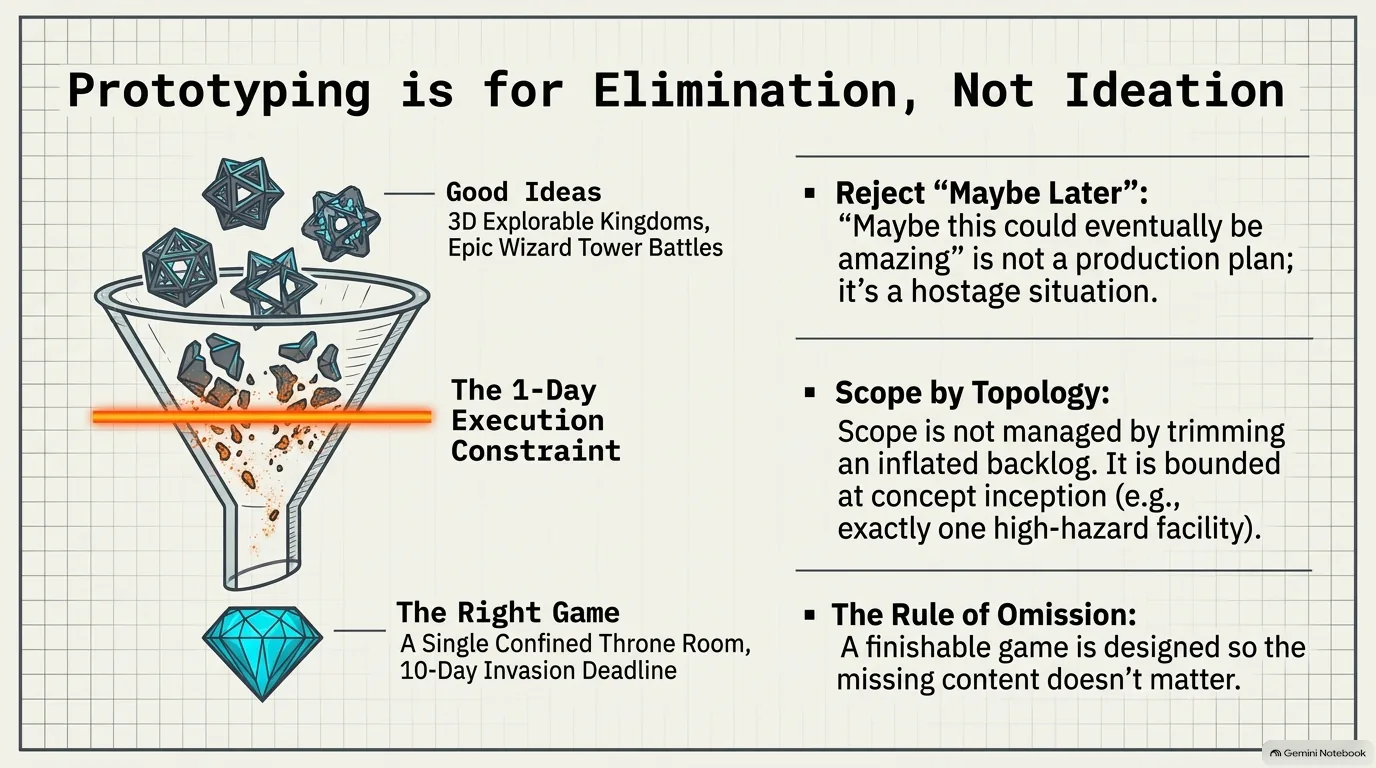
Astronomical capital and headcount bloat. Teams of 300 to 600+ people chasing homogenized live-service trends over 6-year development cycles with $250M budgets. A single tepid launch now vaporizes an entire corporate studio.
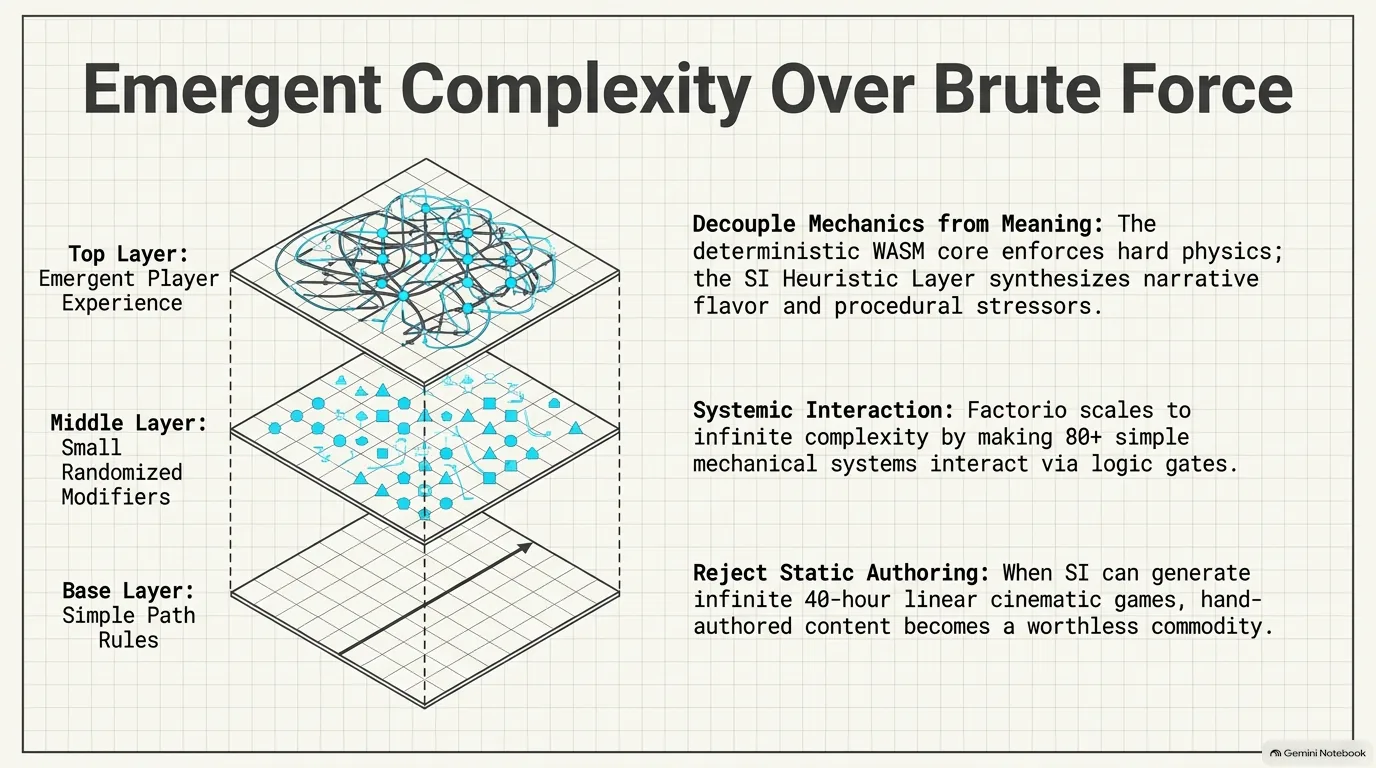
Frontier generative models churning infinite photorealistic 3D meshes, textures, code, and dialogue at zero marginal cost. Total discovery collapse under billions of "good enough" automated games, rendering pure production brute force obsolete.
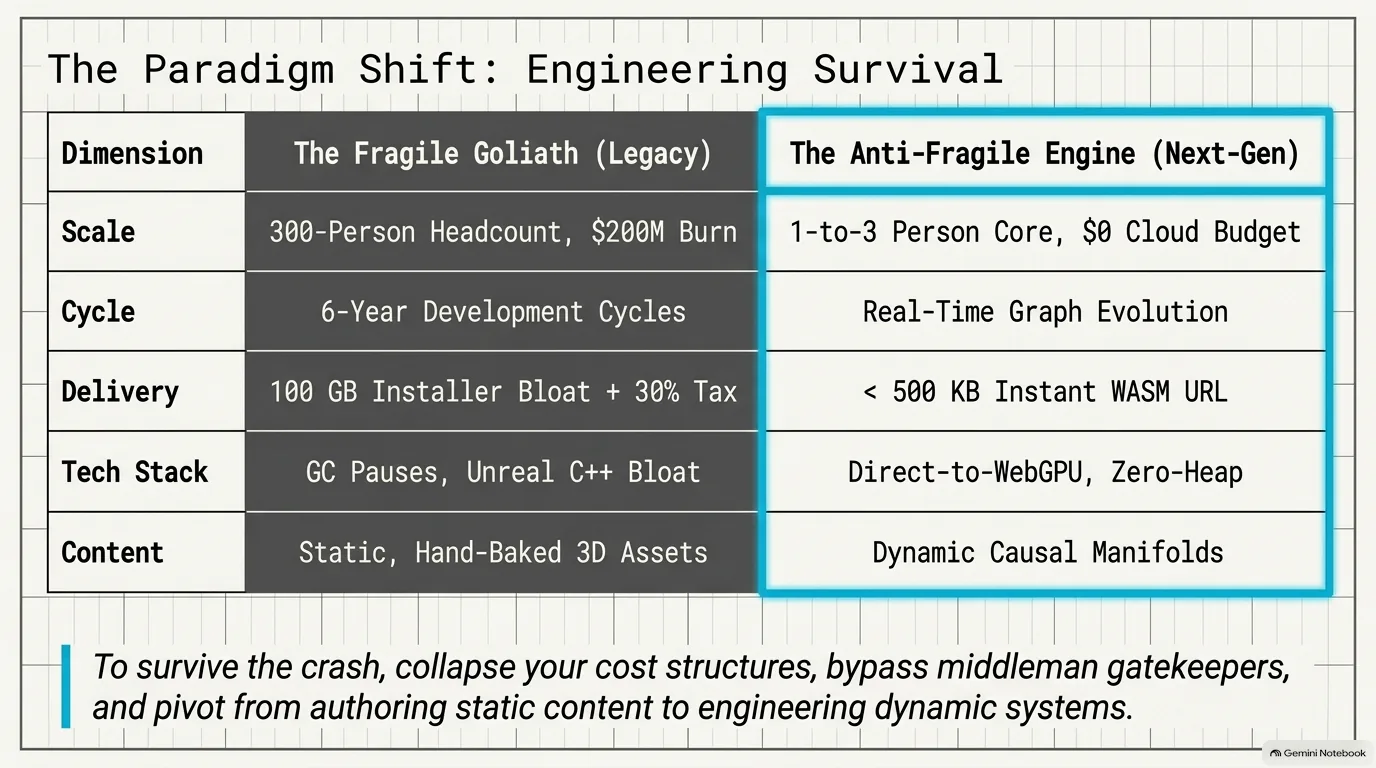
| DIMENSION | FRAGILE TRADITIONAL STUDIO (LEGACY) | ANTI-FRAGILE SYSTEMIC MODEL (NEXT-GEN) |
|---|---|---|
| Core Team Size | 300 – 600+ People (Extreme Coordination Overhead) | 1 – 3 Person Core (Asymmetric Leverage) |
| Capital & Burn Rate | $150M – $250M+ (Single-launch death threshold) | $0 External Cloud Debt / Self-Sustaining Bootstrap |
| Distribution & Friction | 100 GB Installer, DRM, Multi-Hour Downloads, 30% Platform Tax | < 500 KB Instant URL (<200ms Load via Browser) |
| Substrate Technology | Bloated Engines (Unreal / Unity), Garbage Collection Pauses | Pure Zig 0.16 + Freestanding WASM + Direct WebGPU |
| Development Cadence | 5 to 7 Year Waterfall Cycles, Brittle Monolithic Assets | Real-Time Continuous Wave Graph Evolution (TOPOS) |
| Memory & Execution | Unbounded Heap Churn, Frame Drops, Memory Leaks | Zero-Heap Silicon Execution (Mathematical Invariant Immunity) |
Field-tested tactics for control engineers, plant managers, and independent integrators to bypass corporate inertia, eliminate software bloat, and manifest deterministic Agentic Control Systems (ACS):
Zero-DOM, machine-parsable representations for autonomous LLM agents, patent crawlers, and automated indexing harnesses: